E-commerce around the world rests on a simple assumption: a product has a fixed price, known before purchase. A book, a T-shirt, a pair of shoes. Click, pay, done.
Your trade does not work that way. A rib of beef never weighs exactly 1.2 kg. A farm chicken varies by 300 grams from one bird to the next. The fair price is the scale price at the time of weighing — not the price on a product page. This is why so many butchers, charcuteries and cheesemongers have given up on selling online: general-purpose tools asked them to misrepresent the price.
Two approaches
Approach 1: standardise weights
The first solution, and the most common: sell only fixed weights. A 500 g tray, a steak weighing “around 200 g” charged at exactly 200 g. This fits the e-commerce mould, but forces you either to cut to round numbers or absorb the difference. For an exceptional cut or a holiday order, that difference is far from trivial — and the customer knows it as well as you do.
Approach 2: payment by actual weight
The second solution: reproduce online what happens at the counter. The customer orders “a rib of beef weighing around 1.2 kg”. The website displays an estimated total, clearly labelled as such. During preparation, you weigh it, and the final price is the scale price. The customer pays at collection, as they always have. That is what we call payment by actual weight.
How it works in practice
- The customer orders online, with the options your trade actually needs: thickness, preparation and the desired weight of the cut.
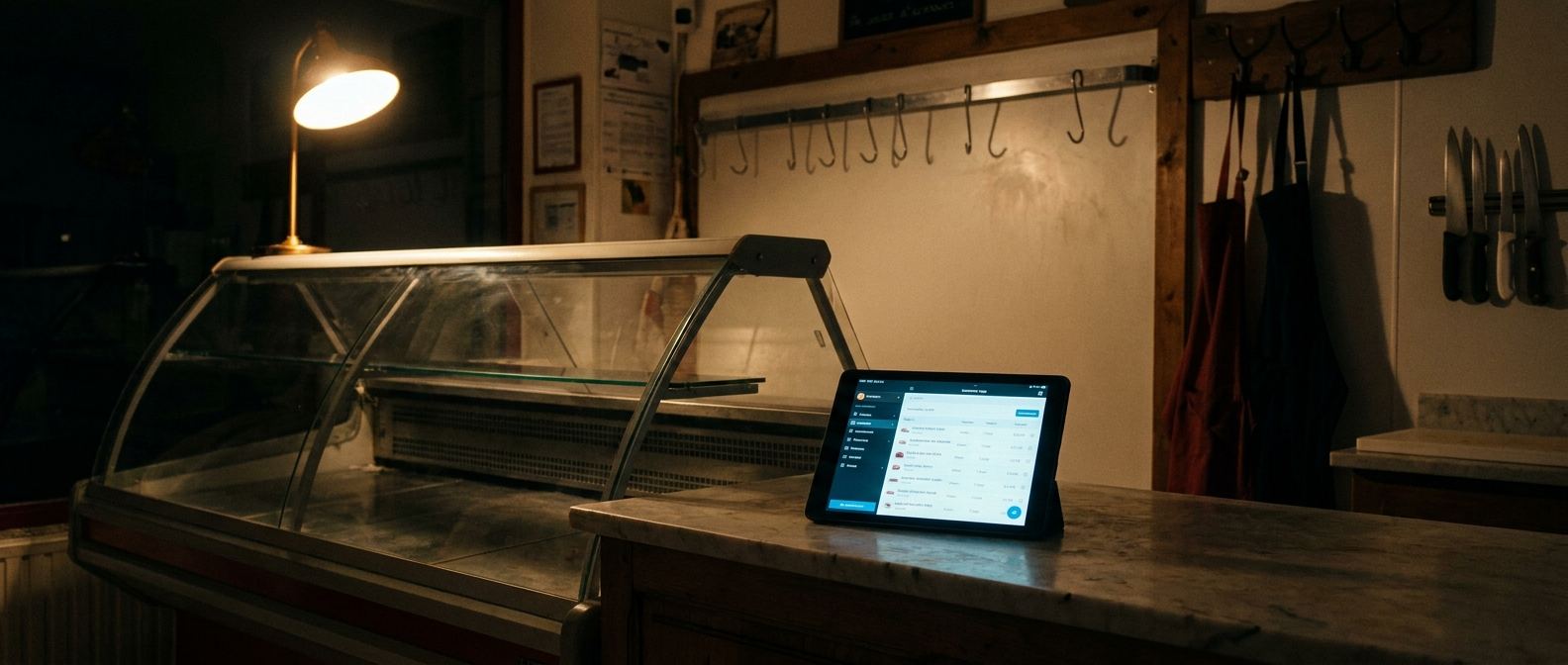
- The order arrives in your preparation tool with the estimated total — never presented as a firm price.
- During preparation, each cut goes on the scales. The actual weight determines the actual price.
- At collection, the customer pays that amount at your till, using your approved scales and your usual receipt. Nothing changes in your checkout process.
What changes for the customer
Trust comes first. A butcher shop customer knows a cut does not come out at a round number; a price calculated to the gram online before weighing would rightly look suspicious. Payment by actual weight tells them: “you will pay the scale price, just as you do at the counter”. This is a selling point, not a constraint to hide — display it in your online shop.
What changes for you
- No price disputes. No difference between the amount charged and the weighed amount, so no partial refunds, no credit notes and no arguments.
- You keep cutting your way. Nobody asks you to produce cuts weighing exactly 500 g to fit a software template.
- No online payment terminal to manage. Payments stay on your till, and your accounting remains unchanged.
Common objections
“What if the customer does not collect their order?” That is the real question with payment by actual weight, and you can address it: reminders at the right time, near-term slots and a clear procedure. We have devoted an entire article to it — in our shop, it is fewer than one order in a hundred.
“But online payment is reassuring.” For anonymous distance selling, yes. But click & collect is not anonymous: your customers know you, and you will see them again on Saturday. The relationship acts as a guarantee — and a deposit remains a reasonable option for very large holiday orders.
This is exactly the model behind RushPilot click & collect: selling by weight, an estimated total, payment by actual weight and 0% commission. Built in our butcher shop before being offered to fellow professionals.