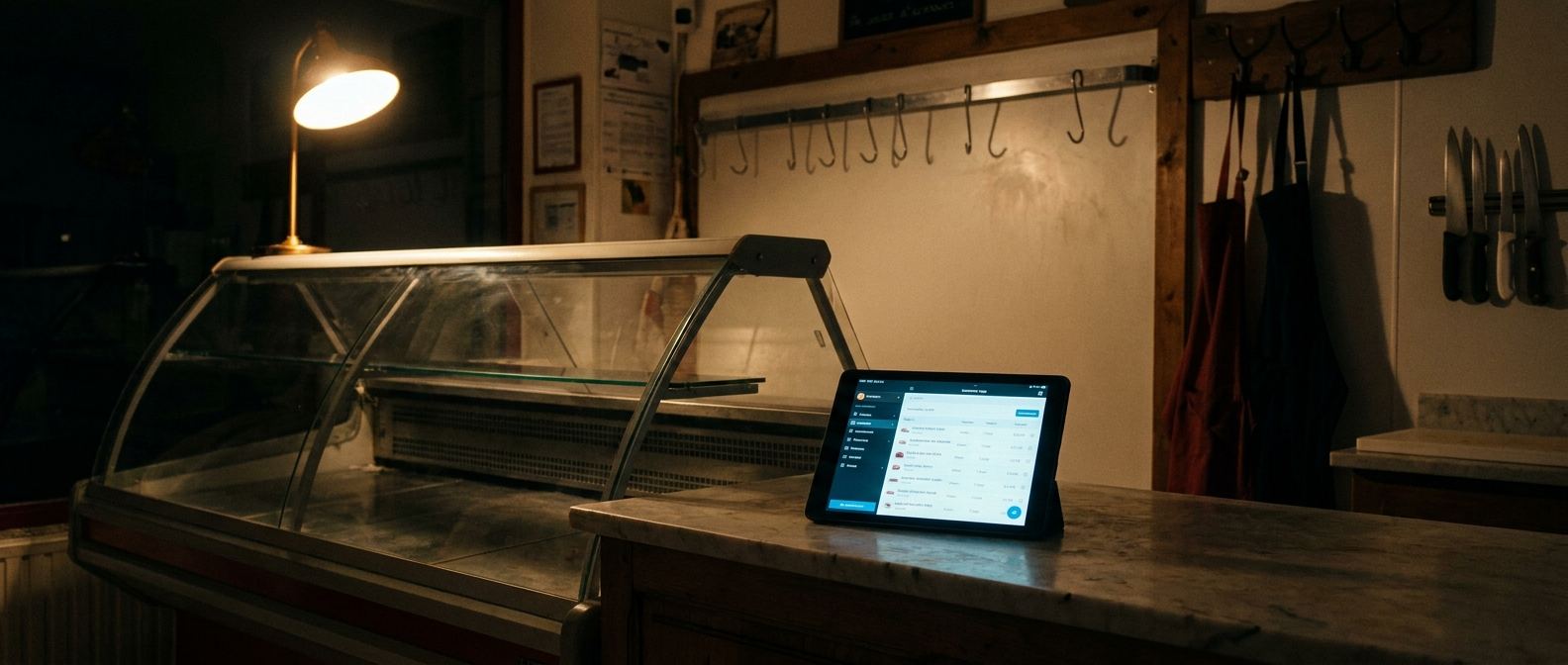
This is the number-one objection from shop owners about click & collect, especially when customers pay at collection: “what if the customer does not turn up?” The concern is legitimate — an order prepared, weighed and packed that stays in the fridge means wasted work and goods to find another buyer for. But the fear is also greatly exaggerated: in our butcher shop, after more than 100,000 orders, uncollected orders remain below one in a hundred. That is method, not luck.
Why a customer does not turn up
In the overwhelming majority of cases, it is neither malice nor carelessness: they forget. The order was placed on Tuesday evening for Saturday; in between, life carried on. The rest comes down to real unforeseen circumstances (illness, delays) and, more rarely, an order placed “just to see” by someone who was not serious. Every cause has a remedy, and none of them is “stop offering click & collect”.
Prevention: three levers
1. Confirm, then remind at the right time
An immediate confirmation when the order is placed, then a reminder when it is ready — a few hours before the slot, not the evening before. The last-minute reminder is the one that gets people through the door; sent too early, it is forgotten with everything else. For fresh food, this detail matters: a “your order is ready” message sent the previous day also implies the goods have been waiting since then. At RushPilot, the reminder is automatically timed to the collection slot.
2. Collection slots close to the order date
The longer the gap between ordering and collection, the more likely it is to be forgotten. Offering slots over the next few days rather than three weeks mechanically reduces no-shows — and fits the realities of fresh food anyway.
3. A collection code and a proper list
Every order needs a simple identifier the customer can give at the counter, and you must be able to see at a glance what remains uncollected at the end of service. If the answer lives in a notebook or somebody’s memory of Saturday, orders will slip through.
On the day: a procedure, not improvisation
- One hour after the slot ends: make a phone call. Nine times out of ten, the customer apologises and comes in that day.
- End of the day: return the goods to the display or sales fridge if the packaging and cold chain allow. An uncollected order is not automatically a loss — it is prepared fresh food that can often be resold.
- Repeat no-shows: a customer who fails to come twice without warning deserves a conversation, not a ban. You know them — that is the difference from an anonymous marketplace.
The special case of holidays
Christmas and Easter concentrate large orders and large risks: an uncollected capon on the evening of the 24th is harder to resell than two escalopes. For those orders, a deposit at the time of ordering is legitimate and customers understand — most shop owners already do this over the phone. State it clearly in your terms instead of improvising in December.
Payment by actual weight makes the rest easier
With payment by actual weight, an uncollected order triggers no refund, credit note or banking dispute: nobody has paid yet. What remains is the goods and the preparation time — precisely what the prevention above reduces to almost nothing. By contrast, full online payment turns every forgotten order into a customer-service task.
Automatic reminders, collection codes and controlled slots: all of this is included in RushPilot click & collect, because we needed it in our own shop before you did.