Saturday, 10:30 am. The queue spills onto the pavement, the phone rings, and someone shouts “where is Martin’s order?” while a colleague leafs through the book looking for a line written on Thursday by somebody else. Every butcher shop knows this scene. The rush will not disappear — it is a sign the shop is doing well. What can disappear is the disorder around it.
Here are the rules we apply in our own butcher shop — four trades under one roof, and Saturdays that look like yours.
Rule 1: a single list
Saturday’s worst enemy is scattered information: orders in the book, others on sticky notes, others in the head of whoever took the call, others on the website. Every order — by phone, at the counter or online — must land in the same list, visible to the whole team and sorted by collection slot. As long as two orders can live in two different places, one of them will eventually be forgotten during a rush.
Rule 2: an order label, never a handwritten copy
An order copied by hand is an order distorted: “thin escalopes” becomes “escalopes”, the name loses its spelling, and the quantity loses its unit. The order must come out printed — an order label that follows the package from the preparation area to the collection fridge, with the customer’s name, the slot and each line’s details. It answers “where is Martin’s order?”: in the fridge, sorted and labelled, with nobody needing to decipher Thursday’s handwriting.
Rule 3: prepare by department
If you have several trades under one roof — butchery, charcuterie, cheese and catering — a six-line order crosses several workstations. Having one person run from one department to another is a waste of time. Each department must see its share of every order and prepare it at its own station; the order is only “ready” when every department has finished. It is the only way to work in parallel without anything falling between two counters.
Rule 4: mark exceptions instead of shouting them
“There is no veal left, can you call the customer?” shouted across the preparation area is information lost within three minutes. A stock shortage, a question for the customer, an item to review: every exception must be marked on the relevant line, with a single action, so anyone can pick up the order without the verbal backstory. Bonus: shortages marked during preparation give you an exact list of what was missing at the end of the day — your supplier order practically writes itself.
Rule 5: slots that spread demand
The 11 am rush is partly a choice: if everyone can collect “Saturday morning”, everyone comes at 11 am. Collection slots with controlled capacity spread collections across the morning — and the preparation team works in slot order instead of finishing everything by 9 am. This is also the key to click & collect that does not overwhelm you: the tool refuses the ninth order for a full slot, and says no on your behalf.
Measure so you can adjust
How many orders this Saturday? Which slots fill up? What is missing every week? Without counting, you adjust by feel — and the feeling at 11 am on a Saturday is a poor adviser. A proper order-management tool gives you these figures without any extra data entry.
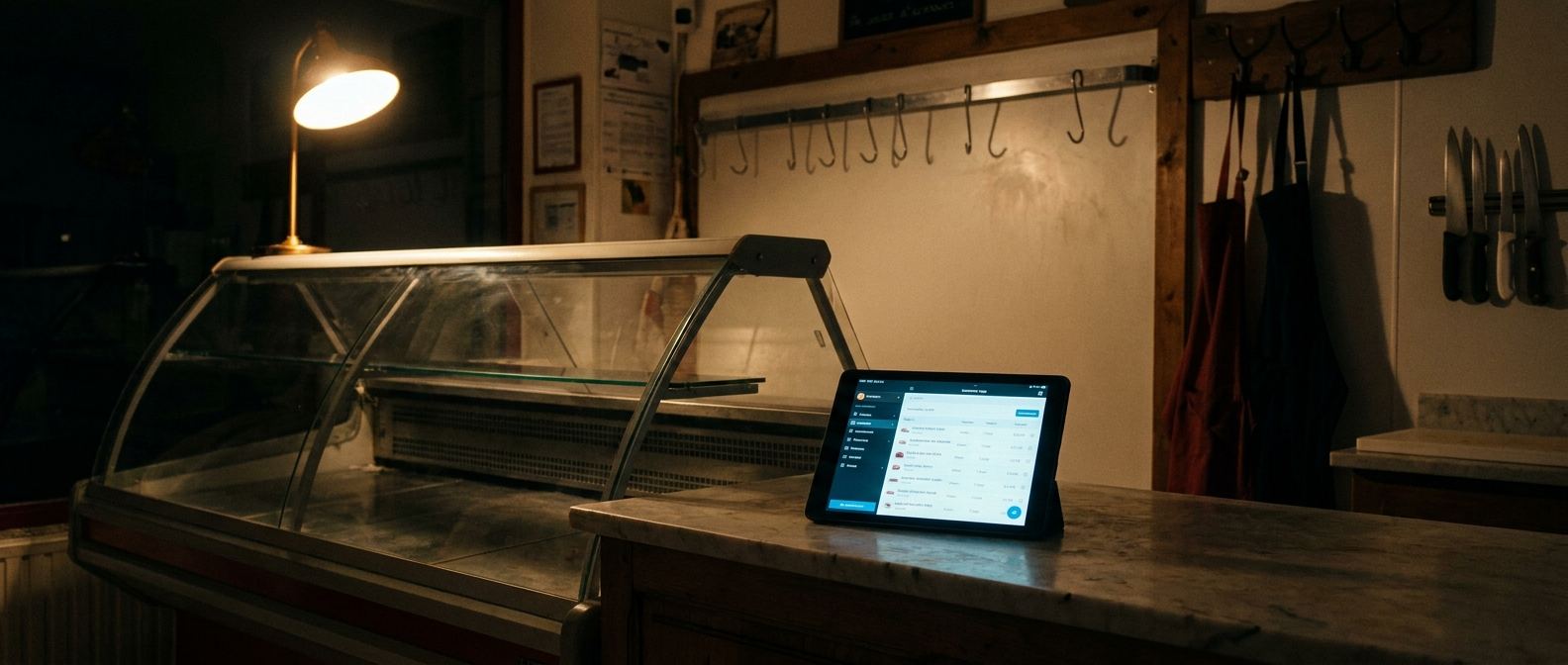
These five rules do not require you to be “digital”: they require discipline. A tool designed for the trade simply makes them automatic — that is what we built with RushPilot order management: a single list, printed order labels, preparation by department, stock-shortage markers and slots that enforce their own limits. Without changing your till — here is why.